
Understanding Even/Odd Roulette Bets
An even or odd wager is an outside bet in roulette that pays 1-to-1 when it wins. Because each selection covers close to half the numbered pockets, these bets are often seen as comparatively favourable options for players. The guide below explains how the wheel’s zero pockets affect that apparent advantage.
How Even and Odd Bets Work
Roulette tables offer a broad range of wagers, each with its own chance of winning and payout. Some choices carry greater risk but return more when successful; others win more often but pay less. That variety gives cautious players and those seeking a bigger thrill different ways to approach a game.
Roulette Wheel Layout: Even and Odd Numbers
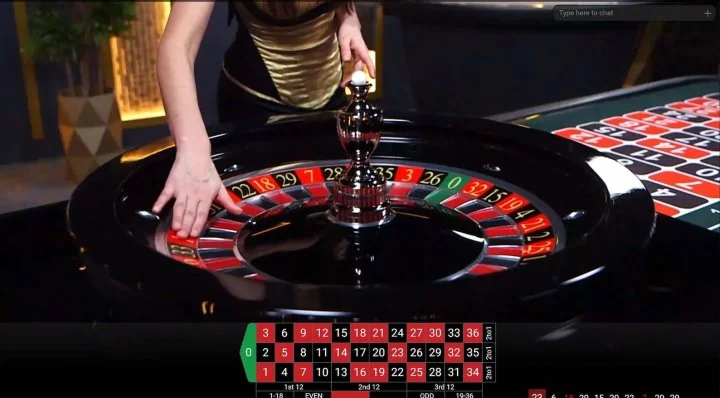
European and American roulette wheels each have 36 numbered pockets, running from 1 to 36. European roulette also includes a zero pocket; American roulette includes both zero and double zero.
Among the 36 numbered pockets, 18 are even and 18 are odd. Neither zero nor double zero belongs to either group. A player therefore wins an even or odd bet only when the ball stops on a numbered pocket of the chosen parity.
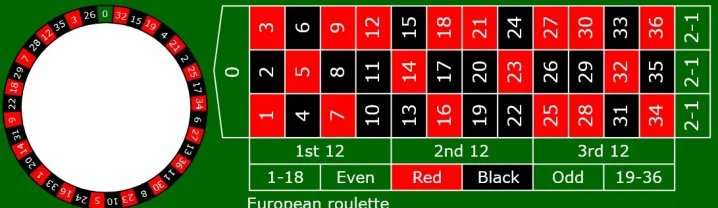
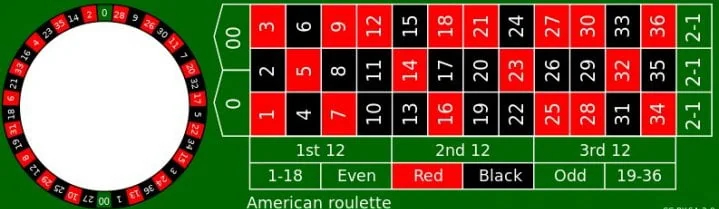
*The diagram above shows the small structural difference between European and American wheels: the American version adds a double-zero pocket.
Inside Bets and Outside Bets
Wagers available when playing roulette generally fall into two categories. An inside bet selects one number or a small cluster of neighbouring numbers; the chance of a hit is lower, while the payout is larger. An outside bet covers a broader set of pockets, increasing the chance of a win but paying less. Even and odd wagers are outside bets because each one includes nearly half of the wheel’s numbered pockets.
Type of Bet Risk Level Potential Payout House Edge (European/American) Inside Bets Single Number High 35:1 2.70% / 5.26% Split High 17:1 2.70% / 5.26% Street High 11:1 2.70% / 5.26% Outside Bets Even/Odd Low 1:1 2.70% / 5.26% Red/Black Low 1:1 2.70% / 5.26% High/Low Low 1:1 2.70% / 5.26%
Note: The table above offers a quick comparison of inside and outside wagers by risk and possible reward, which can help when choosing where to place chips.
How They Compare with Other Outside Bets
Even and odd are not the only common outside selections. Players can also choose red or black, or high or low numbers. Like even/odd wagers, these offer a chance close to 50% on a European wheel and similar chances on an American wheel. The choices differ in what they group together: colour bets follow the pocket colours, while high/low wagers divide the numbers by range.
Type of Bet Probability of Winning (European/American) Payout Unique Advantages Even/Odd 48.64% / 47.36% 1:1 Easy to understand, nearly 50% chance of winning Red/Black 48.64% / 47.36% 1:1 Nearly 50% chance of winning; visually easier to follow High/Low 48.64% / 47.36% 1:1 Diversifies bets, nearly 50% chance of winning Dozens 32.43% / 31.58% 2:1 Higher payout; covers a range of 12 numbers Columns 32.43% / 31.58% 2:1 Higher payout; covers a vertical column of 12 numbers
Note: The table indicates that even/odd, red/black and high/low each come close to a 50% chance, while dozens and columns have a lower chance of winning in exchange for larger potential payouts.
Winning Probability and the House Edge
Consider an imagined roulette wheel containing 36 numbered pockets, from 1 through 36, with neither a zero nor a double zero. In that model, half the pockets would show even numbers and half would show odd numbers. A wager on either side would therefore have a chance of 18/36 = 0.5, or 50%. Since each pocket falls into one of those groups, this simplified wheel would offer a fair bet without a house edge.
The real wheel is not limited to 36 numbered pockets: on European roulette, a zero pocket is also present. As a result, an even or odd wager succeeds with probability 18/37 = 48.64%. The odds of winning are 1.01-to-1, while the payout remains 1-to-1. Since the return does not match the underlying chance, the difference leaves an approximate house edge of 2.7%.
American roulette adds a double-zero pocket as well, further reducing the chance of a successful even or odd wager. The probability is 18/38 = 0.4736, or 47.36%. A win still pays 1-to-1, while the true odds are 1.11-to-1. The resulting house edge is approximately 5.26%.
What the House Edge Means
The house edge describes the casino’s statistical advantage over many plays. A 1-to-1 payout can look even, but the zero pockets mean the chance of losing is greater than the chance implied by that payout. European roulette gives an even or odd bet a better chance than American roulette, though both retain a house advantage. If choosing between these wheel types, European roulette has the lower edge for this wager.
The “En Prison” Rule
French roulette and some European roulette games offer the “En Prison” rule. The French phrase means “in prison”: if a spin ends on zero, the even or odd stake may be held for the following round instead of being settled immediately. This treatment reduces the house edge on even-money bets, so check the table rules to see whether it applies.
In Summary
Even and odd wagers are common roulette choices with modest payouts and less risk than many inside bets. Since each covers a large share of the numbered pockets, they can help a player make a bankroll last longer, although they do not remove the house edge.
These bets may not suit everyone. Some players value the excitement of a larger possible return, and a single-number wager can pay as much as 35-to-1. The chance of winning is much lower in return. Anyone drawn to that higher-risk possibility may prefer it to betting only on even or odd.